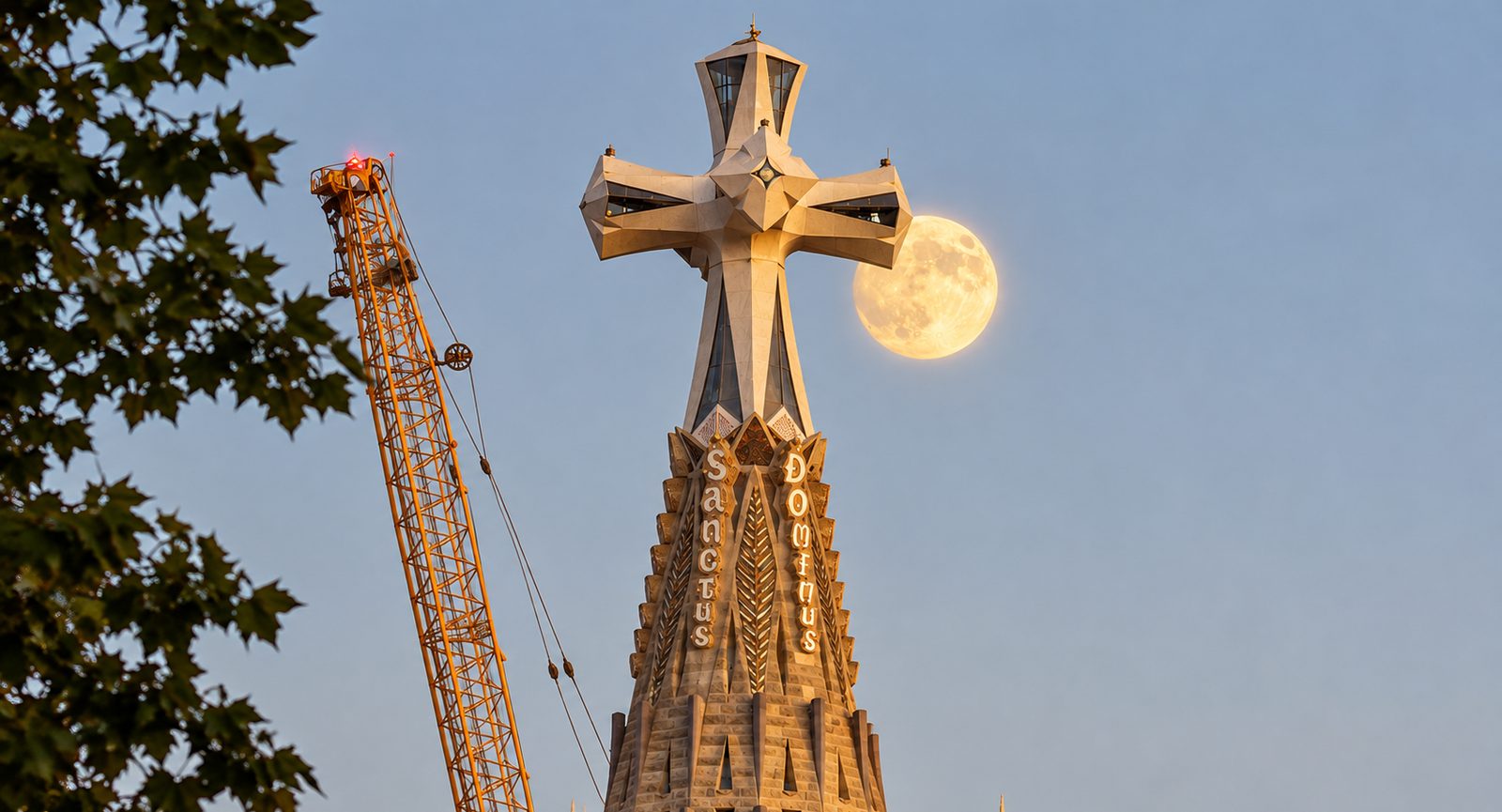
Barcelona is easy to recognize: Gaudí’s architecture, the Mediterranean, busy squares, tapas and long evenings outside.
But if you spend a little more time here, you will notice that everyday life has its own rhythm too.
Some Catalan traditions are connected to food. Others are linked to the calendar, family life, neighborhood celebrations or simply spending time together.
If you are visiting Barcelona and want to understand more about the culture around you, these are some Catalan traditions worth knowing.
Vermut and the Art of Taking Your Time
One of the easiest Catalan traditions to notice in Barcelona is vermut.
Going for a vermut usually means meeting friends or family before lunch, ordering vermouth and having something small to eat alongside it. Olives, chips, conservas and other snacks are common companions.
The important part is often the social ritual rather than the drink itself.
And the idea of meeting socially over a drink continues throughout the week. After work, you may see friends or colleagues meeting for a beer, wine or another drink before heading home.
Sunday lunches are another example of this way of spending time together. Families and friends can sit around a table for several hours, taking their time over lunch, conversation and coffee.
Catalan Food Has a Calendar
Many Catalan foods are connected to particular celebrations and times of year.
At Christmas (December 25), traditional dishes can include escudella i carn d’olla, canelons and turrons.
Around Three Kings’ Day (January 6), you will find tortell de Reis, a ring-shaped cake traditionally decorated with candied fruit and shared with family.
At Easter, which changes date each year, there is mona de Pasqua, traditionally associated with godparents giving the sweet to their godchildren.
On April 23, Sant Jordi brings books and roses to the streets of Barcelona. Food is not the main part of this celebration, but it is one of the most important dates in the Catalan calendar.
On June 23, the eve of Sant Joan, coca de Sant Joan is one of the foods most closely associated with the celebration.
Around November 1, La Castanyada brings chestnuts, sweet potatoes and panellets to the seasonal table.
Christmas Traditions: Tió de Nadal and Three Kings
Christmas in Catalonia has some traditions that may be completely new to visitors.
One of the most famous is the Tió de Nadal, often called Caga Tió. Traditionally, children look after a decorated wooden log in the days before Christmas. On Christmas Eve or Christmas Day, they sing traditional songs and hit the log with sticks before lifting its blanket to discover small gifts and sweets underneath.
Then comes Three Kings’ Day, or Reis, on January 6. The arrival of the Three Kings is an important part of the Christmas season, with parades taking place in Barcelona and towns across Catalonia.
Sant Jordi: Books, Roses and the Streets of Barcelona
If there is one date you should know when learning about Catalan traditions, it is Sant Jordi, celebrated on April 23.
The day is associated with books and roses, and Barcelona becomes particularly lively as book stalls and flower stands appear throughout the city.
It is one of the most distinctive days of the Catalan calendar, and you can experience the tradition simply by walking through the city and seeing how the streets change for the occasion.
Sant Joan: Welcoming Summer
The night of June 23, the eve of Sant Joan, marks the arrival of summer.
In Barcelona and throughout Catalonia, the celebration is associated with fireworks, bonfires, gatherings and staying up late into the night.
Food has its place too. Coca de Sant Joan, a sweet enriched bread that comes in different varieties, is one of the foods most closely associated with the celebration.
It is a very different side of Barcelona from the city you see during the day: streets, beaches and neighborhoods become places to celebrate together.
Castells: Human Towers
Some Catalan traditions are spectacular to watch.
Castells are human towers built by teams known as colles castelleres. Participants climb on top of one another to form structures several levels high, with the youngest participants often making up the upper part of the tower.
You can see castells during festivals and traditional celebrations in Barcelona and throughout Catalonia.
Gegants: Giants in the Streets
If you are walking through Barcelona during a local festival, you may suddenly see enormous figures moving through the streets.
These are gegants, giant figures that represent historical, legendary or traditional characters.
They are carried during processions and often appear alongside musicians, dancers and other elements of the celebration.
You may encounter them during neighborhood Festa Majors or other traditional events.
Correfocs: Fire in the Streets
Another tradition that is difficult to miss is the correfoc.
Groups known as colles de diables dress in devil costumes and run through the streets surrounded by fireworks and sparks.
Correfocs are usually part of a larger local festival rather than something you will encounter on an ordinary day.
If you see one during your visit, follow the organizers’ safety instructions and keep an appropriate distance from the fireworks.
Festa Major: When a Neighborhood Celebrates
Catalan traditions are often most visible during Festa Majors, the major annual celebrations of towns and neighborhoods.
These festivals can include concerts, traditional dances, food, decorations, children’s activities, processions, castells, gegants and correfocs.
One of the best-known examples in Barcelona is the Festa Major de Gràcia, when streets are decorated by neighborhood groups and the area fills with activities.
But Gràcia is not the only neighborhood with its own Festa Major. These celebrations are part of community life across Barcelona and Catalonia.
I hope you’ve enjoyed discovering a little more about Catalan traditions with me.
Bye Bye! See you in my next post!