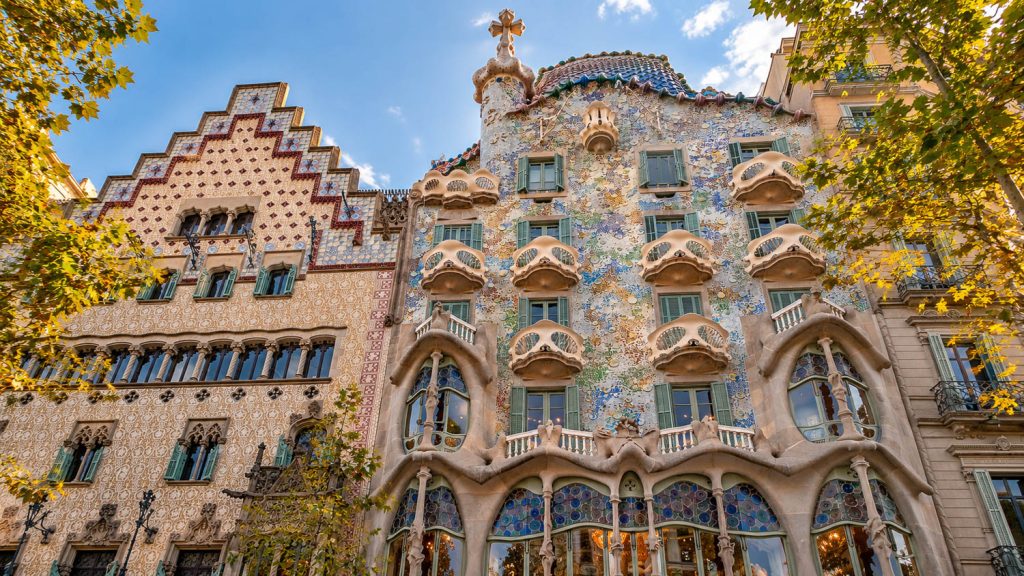
Barcelona is famous for Gaudí, the Gothic Quarter and its beautiful Mediterranean streets.
But some of the city’s most fascinating places are surprisingly easy to miss. Behind an ordinary doorway, inside a quiet courtyard or along a street you might walk down without a second thought, there’s often an unexpected piece of history waiting to be discovered.
Here are five places that reveal a different side of Barcelona.
1. The Roman Temple Hidden Behind a Doorway
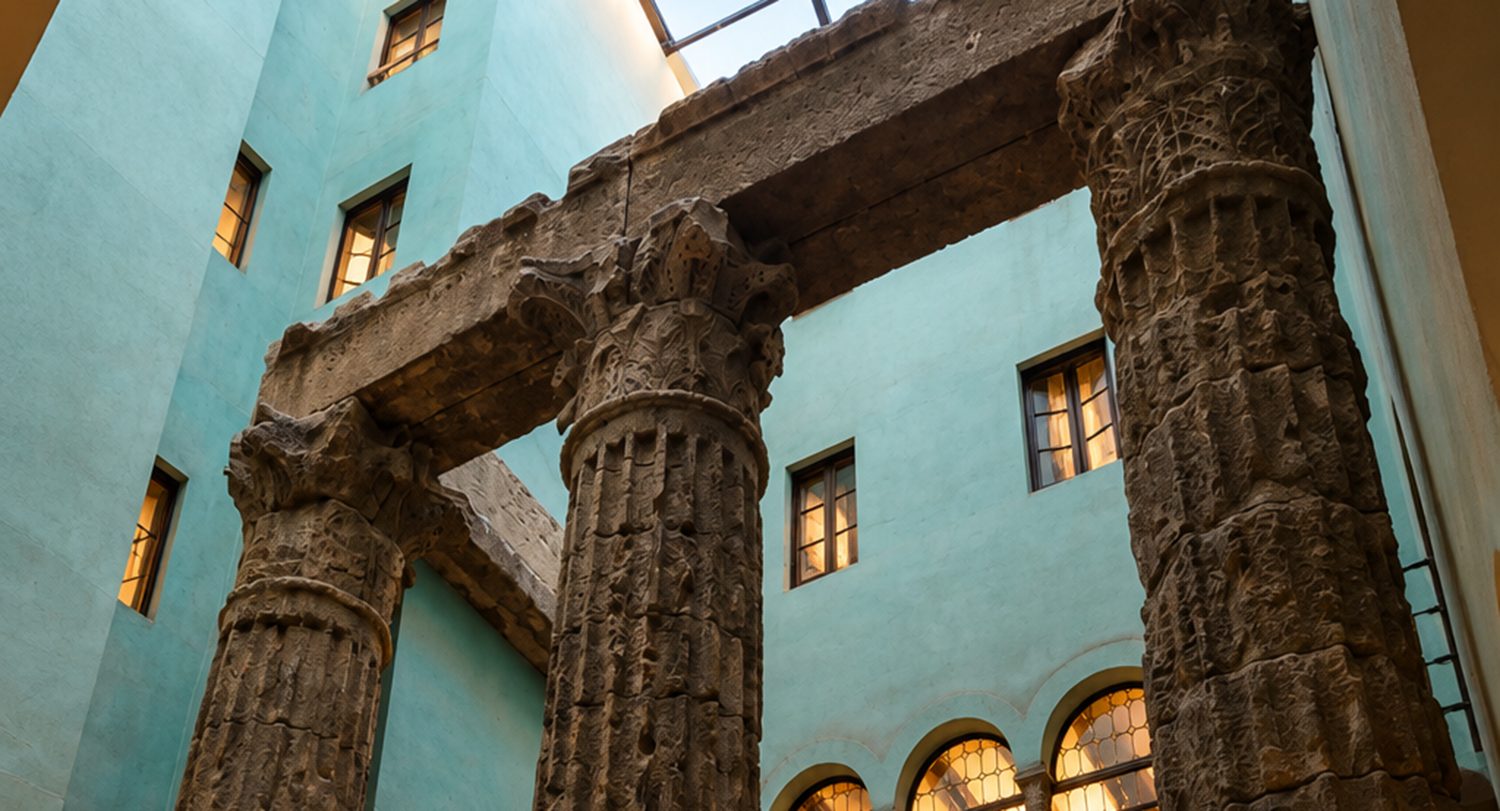
Just a short walk from Barcelona Cathedral, on Carrer del Paradís, you’ll find one of the city’s most extraordinary surprises.
Inside the building of the Centre Excursionista de Catalunya stand four enormous Roman columns, the remains of the ancient Temple of Augustus. They date from the first century BC, so they’re more than 2,000 years old, and they offer a remarkable glimpse into Barcino, the Roman colony that existed long before modern Barcelona.
One of the columns originally stood in Plaça del Rei and was added to the group later.
From the street, you would hardly imagine what’s waiting inside. And it’s free to visit.
2. Casa de l’Ardiaca: A Courtyard Full of History
Close to the Cathedral, Casa de l’Ardiaca is another place worth a closer look.
The building dates back to the twelfth century and incorporates part of Barcelona’s ancient Roman wall. Later centuries added Gothic and Renaissance touches, and its peaceful courtyard, completed as a cloister in the nineteenth century, brings those layers together. Today it houses the city’s Historical Archive.
Outside, there’s another curiosity: an elaborate marble letterbox designed in 1895 by modernist architect Lluís Domènech i Montaner, when the building became the headquarters of Barcelona’s Lawyers’ Association.
It’s decorated with swallows, ivy and a tortoise. The swallows stand for swift justice, while the ivy and the tortoise poke fun at tangled procedures and painfully slow ones.
It’s a wonderful example of how even the smallest architectural details can tell a story.
3. Sant Pau del Camp: A Quiet Corner of Medieval Barcelona
In the lively Raval neighbourhood stands one of Barcelona’s oldest religious buildings.
The monastery of Sant Pau del Camp was probably founded before the year 911, and the church we see today is mainly a twelfth-century Romanesque gem. Its small cloister feels far removed from the busy streets outside, with unusual lobed arches that some scholars link to Islamic influence.
Look closely at the carved capitals. Most are decorated with plants, but among the leaves you’ll find birds, lions and even sirens.
It’s the kind of place that reminds you just how many layers of history Barcelona holds.
4. Palau Baró de Quadras: One Building, Two Faces
Barcelona’s modernist architecture goes far beyond Gaudí.
On Avinguda Diagonal, Palau Baró de Quadras, built between 1904 and 1906, is a fascinating example of the creativity of architect Josep Puig i Cadafalch.
What makes it especially interesting is that its two façades look remarkably different.
From Diagonal, it resembles an elaborate palace, with Gothic and Plateresque inspiration and rich carved decoration. From Carrer del Rosselló, the façade is far simpler, a reminder that the building began life as an ordinary block of flats.
Same building, two very different personalities.
It’s worth walking around the block just to appreciate the contrast.
5. Fabra i Coats: Barcelona’s Industrial Past Reimagined
Not all of Barcelona’s hidden treasures are medieval or modernist.
In Sant Andreu, the former Fabra i Coats textile factory tells the story of a city shaped by industry and working-class neighbourhoods. The company was founded in 1903, and by the 1920s more than 2,000 people were working at its factories, around 80% of them women.
Today, the central part of the old industrial complex has been transformed into a creation centre, with studios, rehearsal rooms and spaces for artists.
It’s a reminder that Barcelona’s identity isn’t only found in grand monuments. It’s also present in the buildings where people once worked and in the neighbourhoods that grew around them.
There’s Always More to Discover
These five places are only a small glimpse of Barcelona beyond its most famous sights.
Some are tucked away in the historic centre; others invite you to explore neighbourhoods you might not otherwise visit.
And that’s part of the beauty of this city: even when you think you know Barcelona, there’s always another doorway, courtyard or street worth discovering.
Would you like to discover places like these with a local guide? Get in touch with us and we’ll be happy to organise a personalised experience around Barcelona.
I hope you’ve enjoyed discovering another side of Barcelona.
Bye Bye! See you in my next post!