Some of Barcelona’s most enjoyable moments happen when you slow down and explore the city on foot.
One of our favourite short walks begins at the Arc de Triomf and leads along a leafy promenade into Parc de la Ciutadella. It’s an easy route, but one filled with architecture, history and little details worth noticing.
Arc de Triomf: More Than a Beautiful Monument
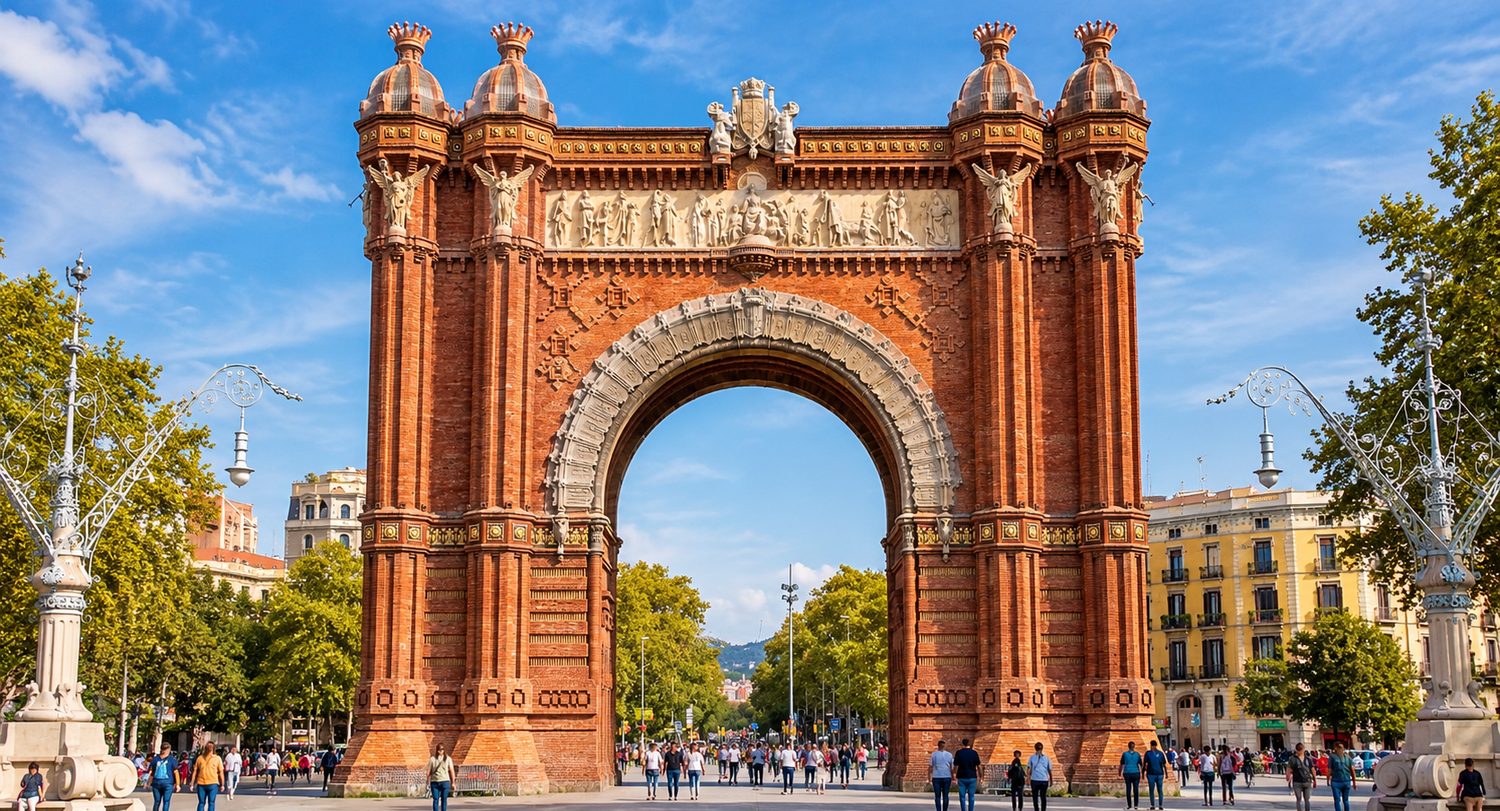
Unlike many triumphal arches around the world, Barcelona’s Arc de Triomf was not built to celebrate a military victory.
Designed by Josep Vilaseca, it served as the ceremonial gateway to the 1888 Universal Exhibition, an event that helped shape modern Barcelona.
Start with the material. Instead of the traditional monumental stone, the arch is built in red brick, with a neo-Mudéjar-inspired design that gives it a distinctive warmth and character.
Then look a little closer at the decorative reliefs. They celebrate themes such as agriculture, industry, commerce and the arts. On the side facing Passeig de Sant Joan, a large frieze depicts Barcelona welcoming the nations that took part in the Exhibition.
It’s a reminder that even a familiar landmark can reveal something new when you take the time to look.
Passeig de Lluís Companys: A Place to Slow Down
From the arch, follow the wide pedestrian promenade towards Parc de la Ciutadella.
In 1888, this was the grand avenue leading visitors towards the exhibition grounds. Today, it’s a lively space where locals walk, cycle, skate or simply sit and enjoy the atmosphere.
Along the way, notice the elegant lampposts designed by Pere Falqués, an architect who also left his mark on Passeig de Gràcia. Their combination of stone and iron, together with the benches incorporated into their bases, makes them much more than ordinary street furniture.
There’s no need to rush. The walk itself is part of the experience.
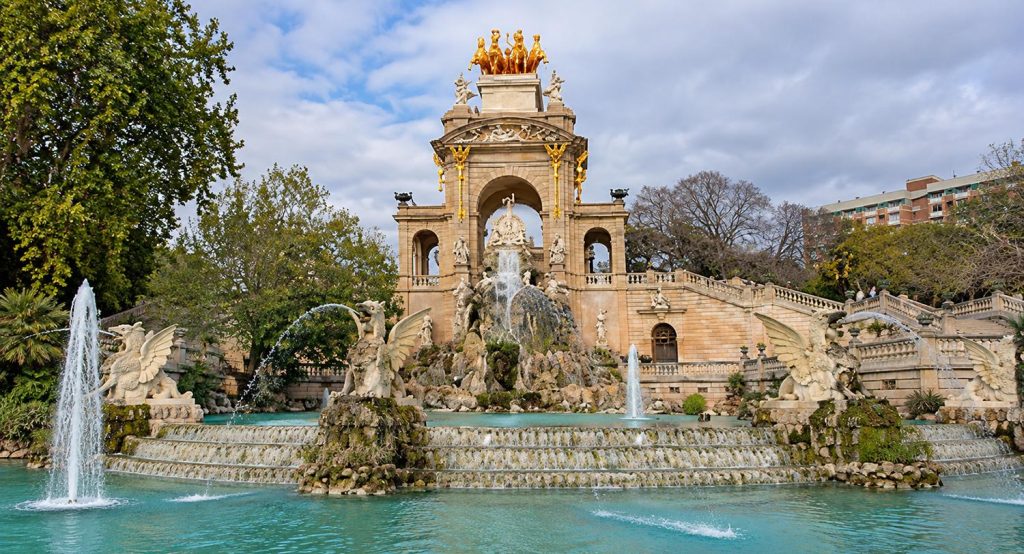
Parc de la Ciutadella: History Hidden Among the Trees
At the end of the promenade, you’ll reach one of Barcelona’s most beloved green spaces.
But behind its peaceful atmosphere lies a rather complicated history.
The park occupies land once dominated by a military fortress built under Philip V after the War of the Spanish Succession. Its construction involved the demolition of a significant part of the La Ribera neighbourhood, changing the lives of many of its residents.
During the nineteenth century, most of the fortress was demolished and the area was transformed into a public park. It later became one of the main settings for the 1888 Universal Exhibition.
Today, that history lives alongside everyday Barcelona: families enjoying the gardens, people relaxing on the grass and visitors discovering the park’s architectural treasures.
A Different Way to Experience Barcelona
This walk isn’t about ticking monuments off a list. It’s about discovering how history, architecture and everyday life come together in one small part of the city.
You can complete the route quite quickly, but we’d recommend giving yourself time to stop, look around and appreciate the details.
Would you like to discover this side of Barcelona with a local guide? Get in touch with us and we’ll be happy to organise a personalised experience for you.
Sometimes, the best way to discover Barcelona is simply to keep walking.
I hope you’ve enjoyed this little walk through Barcelona.
Bye Bye! See you in my next post!